

Running a small business is a test of endurance. Owners frequently balance the roles of accountant, customer service representative, marketing director, and operations manager all in a single day. While wearing multiple hats is often necessary during the early stages of a venture, it quickly becomes a barrier to long-term growth and personal well-being.
The secret to scaling an enterprise without burning out does not lie in working longer hours; it lies in shifting the operational burden to modern digital tools. Today, specialized software can manage repetitive, time-consuming administrative tasks automatically. By implementing the right technological stack, small businesses can achieve enterprise-level efficiency, allowing leaders to focus their energy on strategic growth and client satisfaction.
Streamlining the Initial Customer Onboarding and Pricing
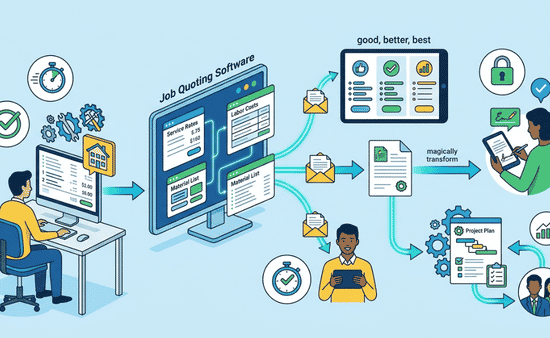
The first interaction with a prospective client often sets the tone for the entire professional relationship. However, manually creating customized estimates, checking material costs, and following up on unread proposals can consume hours of valuable time each week.
Eliminating the Friction of Estimates
In a fast-paced market, speed and accuracy are critical when converting leads into paying clients. If your team relies on messy spreadsheets or memory to calculate costs, your pricing will inevitably vary, and delays will occur. Utilizing a dedicated job quoting software solves this bottleneck by centralizing service rates, labor costs, and material fees into a single digital library.
This technology allows your team to generate professional, accurate estimates in minutes rather than days. Furthermore, these platforms provide visibility by tracking when a client opens a proposal and sending automated, polite reminders to encourage approvals. Once a client signs electronically, the system automatically converts the quote into an active project, passing all notes and line items along without any manual data re-entry.
Offering Flexible Pricing Models
Modern estimation tools also allow businesses to present tiered choices, such as good, better, and best options, directly within the digital proposal. This structure empowers the consumer to customize their service package and select optional add-ons independently, increasing average contract values without requiring tedious back-and-forth negotiations.
Automating Financial Workflows and Cash Flow Management
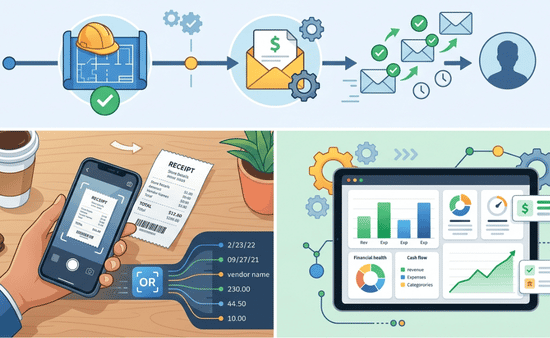
Managing cash flow is the heartbeat of any small business, yet chasing overdue payments and organizing receipts is widely considered one of the most frustrating aspects of business ownership.
Frictionless Invoicing and Reminders
Waiting for clients to settle accounts can severely restrict your operational budget. Automated accounting platforms eliminate this stress by linking directly to your project management tools. As soon as a milestone is completed, an invoice is generated and emailed instantly.
Instead of forcing you to initiate awkward conversations about late payments, the software monitors the due date and autonomously sends structured follow-up notices to past-due accounts. This steady automation keeps your cash flow predictable while preserving your customer relationships.
Centralized Expense Tracking
Traditional bookkeeping often involves a shoebox full of paper receipts and hours of data entry at the end of the tax year. Modern financial tools allow team members to capture images of receipts on their phones, automatically extracting the date, vendor, and amount using optical character recognition. The software then categorizes the expense instantly, ensuring your books remain balanced and audit-ready every single day.
Enhancing Team Collaboration and Project Management

As a business grows, keeping track of moving parts, deadlines, and internal communications becomes increasingly complex. Relying on disorganized email threads leads to missed deadlines and internal confusion.
Centralized Task Assignment
Project management software acts as a single source of truth for your entire staff. These platforms allow managers to break large projects down into individual, trackable tasks, assign them to specific team members, and establish clear deadlines. Because everyone can see the project timeline and status in real time, the need for disruptive status meetings is drastically reduced.
Smooth Remote and Mobile Connectivity
Modern operations require flexibility, especially for service providers who spend their days in the field or working remotely. Cloud-based collaboration tools ensure that field technicians, remote staff, and office personnel stay perfectly aligned. Documents, project updates, and client files are accessible securely from any smartphone or tablet, allowing work to progress seamlessly regardless of geographic location.
Embracing a Fully Integrated Future
Investing in modern business software is not about replacing the human element of your enterprise; it is about liberating your workforce from mundane data entry. When your financial tracking, customer onboarding, and project management systems communicate seamlessly with one another, human error is minimized, and operational speed skyrockets. Embracing these tech-driven efficiencies allows small businesses to remain highly competitive, protect their profit margins, and give owners the freedom to lead with clarity and purpose.