

For many homeowners, a home elevator is no longer a luxury reserved for grand estates. Whether you are planning a remodel, building a custom home, or simply future-proofing your property, understanding the different types available is the first step toward making the right choice.
Why Homeowners Are Choosing Home Elevators

Utah’s housing market has seen significant growth in multi-level homes, particularly in communities across the Salt Lake Valley. Stairs that feel manageable today can become a serious obstacle years down the line — especially for homeowners who plan to stay in their homes long-term.
A home elevator adds genuine functional value. It makes every floor of your home equally accessible, improves the day-to-day convenience of carrying laundry, groceries, or furniture between levels, and significantly increases your property’s resale appeal. For homeowners remodeling with aging in place in mind, a home elevator can be the centerpiece of a comprehensive accessibility plan.
Types of Home Elevators
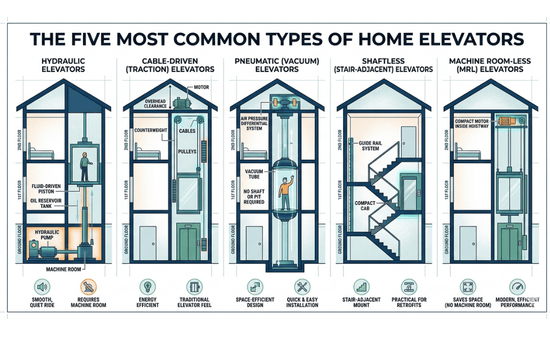
Not all home elevators are built the same. Each type has different space requirements, installation needs, and price points. Here is a breakdown of the most common options available to homeowners.
Hydraulic Elevators
Hydraulic elevators use a fluid-driven piston system to move the cab up and down. They are known for their smooth, quiet ride and are one of the most popular choices for residential installations.
These elevators require a separate machine room to house the hydraulic pump, which means they need more dedicated space than other types. However, they are highly reliable, handle heavier weight capacities well, and tend to have lower long-term maintenance costs. For larger homes with sufficient space, a hydraulic elevator is often the most comfortable and durable option.
Cable-Driven (Traction) Elevators
Cable-driven elevators operate using a system of cables, pulleys, and a counterweight — similar to the elevators found in commercial buildings, but scaled for residential use. They are energy-efficient because the counterweight offsets much of the energy needed to lift the cab.
This type works well in homes with a dedicated shaft and enough overhead clearance for the motor and pulley system. Cable-driven elevators offer smooth operation and are a solid choice for homeowners who want a traditional elevator feel with strong long-term performance.
Pneumatic (Vacuum) Elevators
Pneumatic elevators, sometimes called vacuum elevators, use air pressure differences above and below the cab to move it between floors. They have a distinctive clear cylindrical design that requires no shaft, no pit, and no machine room — making them one of the most space-efficient options on the market.
Because of their self-supporting structure, pneumatic elevators are particularly appealing for remodels where cutting into existing walls or floors is not ideal. Installation is faster and less invasive than other types. The trade-off is a lower weight capacity and a somewhat smaller cab size, which may not suit all users or all home layouts.
Shaftless (Stair-Adjacent) Elevators
Shaftless elevators are compact units designed to travel along a single wall or in a small, dedicated space — often installed alongside an existing staircase. They do not require a full elevator shaft, making them one of the most practical options for retrofit projects in existing homes.
These units are typically slower than full-shaft elevators and carry lighter loads, but they offer a cost-effective entry point for homeowners who need basic vertical access without a major structural overhaul. They are especially well-suited for two-story homes where the primary goal is moving between just two levels.
Machine Room-Less (MRL) Elevators
Machine room-less elevators use a compact motor mounted directly inside the hoistway, eliminating the need for a separate mechanical room. This design saves valuable square footage while still delivering the performance of a full cable or traction system.
MRL elevators have grown in popularity because they offer a strong balance of performance, space efficiency, and cost. They are a practical choice for both new construction and larger remodeling projects.
Choosing the Right Elevator for Your Home
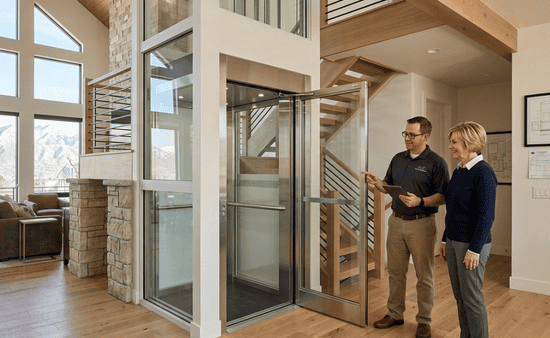
The best home elevator depends on several factors: the size and layout of your property, the number of floors you need to connect, your budget, and how extensively you are willing to modify your existing structure.
For new construction or major remodels, hydraulic, cable-driven, or MRL elevators offer the best long-term value. For retrofit projects in existing homes, pneumatic or shaftless elevators are often the most practical and cost-effective starting point.
Before making a final decision, consulting with a licensed installer familiar with local building codes and permit requirements is strongly recommended. Homeowners exploring residential elevators in Salt Lake City, UT, will find that regulations govern shaft construction, electrical connections, and inspection requirements — and working with a knowledgeable professional ensures your installation is safe, compliant, and built to last.
Conclusion
Choosing a home elevator is a meaningful decision that touches on safety, comfort, and the long-term value of your property. Taking the time to evaluate your options and consult with a qualified professional will ensure you find the right fit for your home and