
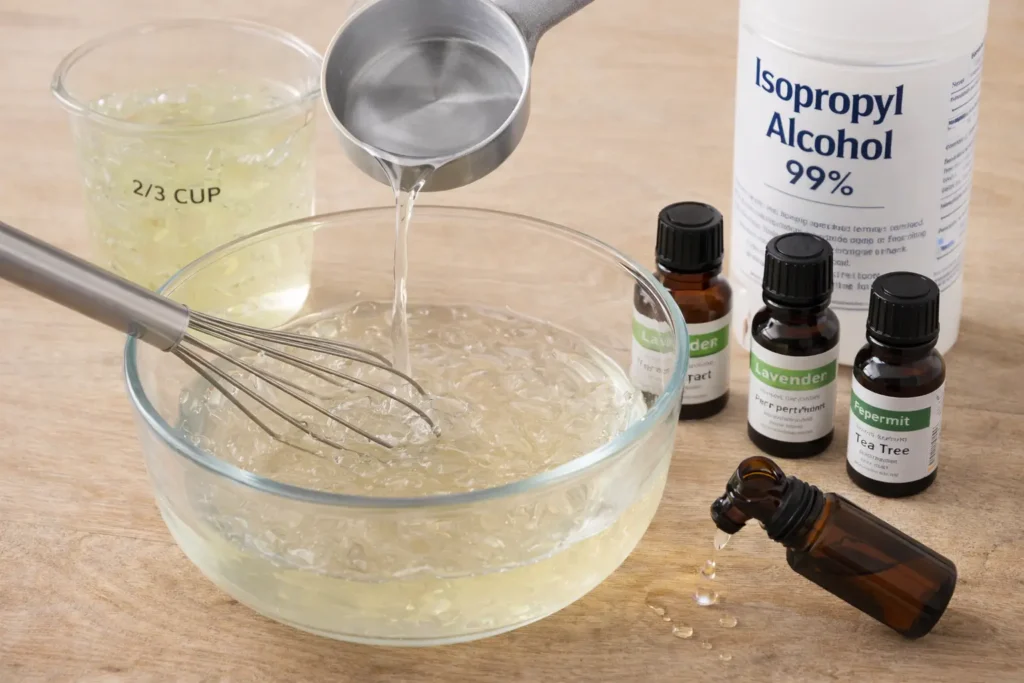
If you’re anything like me, you’ve found yourself running low on hand sanitizer more than once, only to realize that stores are sold out. It’s frustrating, especially when you need a quick fix, and you don’t want to compromise on quality.
That’s when I decided to make my own. I found that making hand sanitizer at home isn’t just easy—it’s also a fun DIY project that gives you full control over the ingredients.
Let’s break down exactly how to make hand sanitizer so you can avoid those panic-buying moments and keep your hands germ-free with something homemade, safe, and effective.
What Makes a Good Hand Sanitizer?
Before jumping into recipes, it’s important to understand what makes an effective hand sanitizer. The key ingredient you need is alcohol—specifically isopropyl alcohol (99%), which should make up at least 60% of the final product.
This is crucial because alcohol is the ingredient that kills the germs. Anything lower, and you won’t get the desired germ-killing effect.
Now that we know what makes a good hand sanitizer, let’s get to the fun part: making it!
How to Make Hand Sanitizer: Simple Gel Recipe
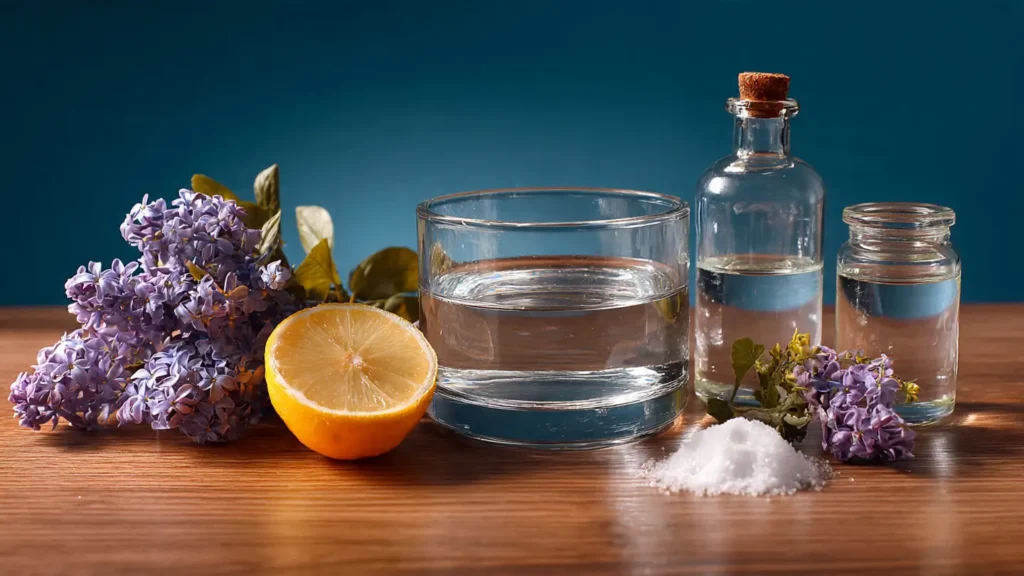
For an easy, quick, and effective hand sanitizer, this gel recipe is perfect. The consistency is similar to the store-bought gel sanitizers, and it’s a great option for personal use. Here’s how you can make it:
Ingredients:
- Isopropyl Alcohol (99%): 2/3 cup
- Pure Aloe Vera Gel: 1/3 cup
- Essential Oil (Optional): 8–10 drops (e.g., lavender, tea tree, peppermint for scent)
Instructions:
- Clean Your Tools: First things first, wash your hands thoroughly and sanitize your mixing bowl, whisk, and storage container. Clean tools ensure you’re not introducing any bacteria into your sanitizer.
- Combine Ingredients: In the clean bowl, pour in the 2/3 cup of isopropyl alcohol and 1/3 cup of aloe vera gel. The alcohol will kill germs, while the aloe vera gel helps moisturize your skin and prevent dryness.
- Mix Well: Use a whisk or spoon to stir the mixture until it’s smooth and homogeneous. Make sure there are no lumps or clumps.
- Add Scent: This is optional, but if you want your hand sanitizer to have a pleasant scent, add 8–10 drops of essential oil. Lavender, tea tree, and peppermint oils are all great options for a refreshing smell.
- Transfer & Label: Use a funnel to pour your homemade hand sanitizer into a clean, airtight travel bottle or pump container. Don’t forget to label it with “Hand Sanitizer” and the date, so you know when it was made!
This gel is perfect for quick use on the go, and it takes just minutes to make!
How to Make Hand Sanitizer: WHO-Recommended Spray (Medical Grade)
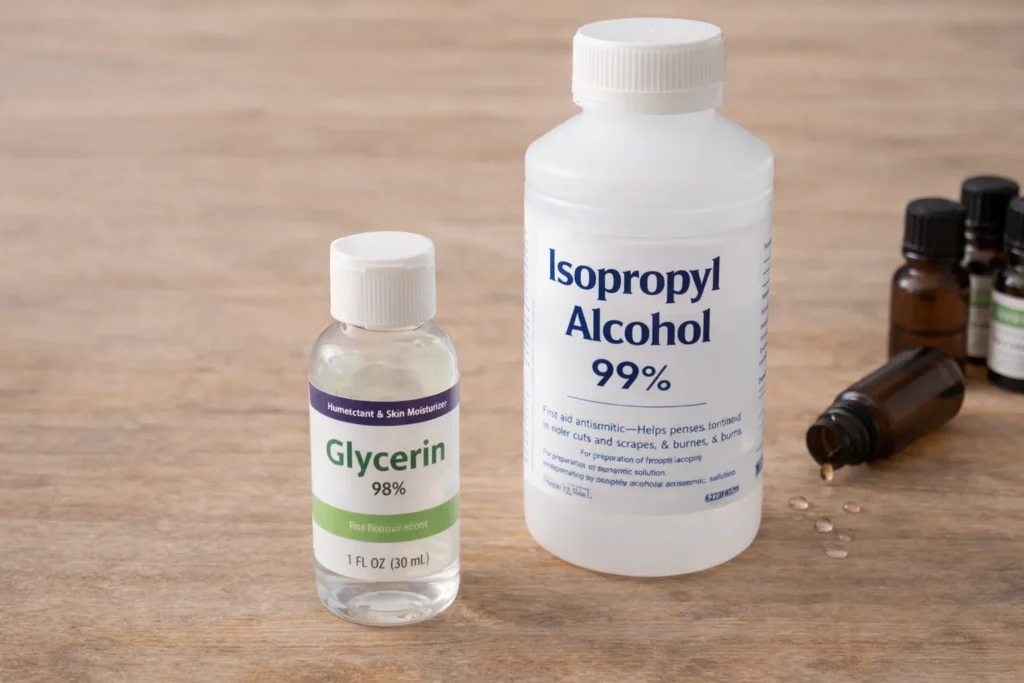
If you’re looking for something more potent and less sticky, the WHO-recommended spray formula is the way to go. This version is liquid, making it ideal for spray bottles, and is designed to meet the World Health Organization’s guidelines for effective hand sanitizers.
Ingredients:
- Isopropyl Alcohol (99.8%): 1 cup
- Hydrogen Peroxide (3%): 1 tablespoon (to eliminate bacterial spores)
- Glycerin (98%): 1 teaspoon (to moisturize)
- Sterile Water: 1/4 cup (distilled or boiled and cooled water)
Instructions:
- Mix Alcohol & Peroxide: In a clean container, combine the 1 cup of isopropyl alcohol with the 1 tablespoon of hydrogen peroxide. Stir well to ensure the two liquids blend completely.
- Add Glycerin: Next, add 1 teaspoon of glycerin, which will act as a moisturizer to prevent your skin from drying out due to the alcohol. Stir or shake well to mix.
- Dilute with Water: Add 1/4 cup of sterile water to dilute the mixture and make it easier to apply. Stir again.
- Wait: The WHO recommends that you let the mixture sit for 72 hours before using it. This waiting period ensures that any microbes introduced during mixing are killed off.
This spray formula is a great option if you want a medical-grade sanitizer that’s fast-acting and less sticky.
How to Make Hand Sanitizer: Safety Tips
While making your own hand sanitizer is a great ways to save money and ensure the ingredients are exactly what you want, there are some important safety tips to keep in mind:
Alcohol Concentration
Never use alcohol that is too weak. 70% alcohol will not reach the 60% threshold needed for proper germ-killing, so always use 99% isopropyl alcohol for the best results.
Avoid Vodka
Don’t use vodka or other spirits, as these typically contain only 40% alcohol, which is far below the minimum requirement to effectively kill germs.
Skin Irritation
Pure alcohol can dry out your skin, so always include a moisturizer, like aloe vera gel or glycerin, to keep your hands soft and hydrated. It’s also essential to avoid using excessive amounts of alcohol to prevent irritation.
Storage
Store your homemade sanitizer in an airtight container to prevent the alcohol from evaporating. And remember, alcohol is highly flammable, so keep your sanitizer away from open flames.
Frequently Asked Questions
1. How long does homemade hand sanitizer last?
Homemade hand sanitizer can last for several months if stored properly in an airtight container, away from direct sunlight and heat. However, if you notice any changes in consistency or scent, it’s time to make a fresh batch.
2. Can I use vodka to make hand sanitizer?
Vodka is not a good substitute for isopropyl alcohol because it typically contains only 40% alcohol. For effective hand sanitizer, you need at least 60% alcohol, so stick with 99% isopropyl alcohol for the best results.
3. How do I make a thicker hand sanitizer?
If you want a thicker consistency, you can adjust the amount of aloe vera gel in your gel recipe. Adding more gel will give you a thicker, more store-bought-like texture. Just be sure to keep the alcohol ratio high enough for sanitizing effectiveness.
4. Is the WHO hand sanitizer recipe the best option for daily use?
The WHO-recommended formula is more potent and less sticky, but it’s designed for medical-grade use. For daily personal use, the simpler gel recipe might be more practical since it’s less runny and easier to carry in a pocket or bag.
Wrapping It Up: Stay Safe, Stay Sanitized
Now that you know how to make hand sanitizer, you’re equipped to keep your hands clean and your skin happy. Making hand sanitizer at home is simple, affordable, and effective. Whether you go with the gel or the spray, both options will help you fight germs on the go.
Pro Tip: Make a batch and leave it by the door or in your car so you always have sanitizer within reach!