

Neurological conditions are among the most complex and life-altering challenges a person can face — and for many patients, conventional treatment alone leaves significant gaps in their care. A broader, more integrated approach to treatment is changing what is possible for people living with conditions that affect the brain, nervous system, and everything connected to them.
Why a Whole-Person Approach Matters in Neurological Care

The brain does not operate in isolation. It is profoundly influenced by the health of the body that houses it — by inflammation, nutrition, hormonal balance, sleep quality, stress, gut function, and dozens of other systemic factors that conventional neurological care has historically treated as separate concerns. When these factors go unaddressed, treatment outcomes are often incomplete — even when the primary neurological condition is being managed appropriately.
An integrated approach to neurological care closes this gap by treating the nervous system within the full context of the patient’s overall health. Rather than addressing symptoms in isolation, it seeks to identify and correct the underlying physiological imbalances that contribute to neurological dysfunction — creating conditions in which the brain and nervous system can heal and function more effectively.
Functional Medicine Evaluation
The foundation of an integrated neurological treatment approach is a thorough functional medicine evaluation that goes well beyond standard neurological testing. In addition to conventional neurological assessment, this evaluation examines a broad range of systemic factors known to influence brain and nervous system health.
Comprehensive laboratory testing — including advanced inflammatory markers, nutritional status, hormonal panels, metabolic function, and gut health indicators — provides a detailed picture of the physiological environment in which the nervous system is operating. Genetic testing may also be incorporated to identify inherited variations that affect neurological risk, detoxification capacity, or nutrient metabolism.
This depth of evaluation allows the treating clinician to build a genuinely individualized treatment plan — one that addresses the specific combination of factors driving each patient’s neurological symptoms rather than applying a standardized protocol that may not account for their unique physiological profile.
Nutritional and Metabolic Optimization
The brain is the most metabolically demanding organ in the body — consuming approximately twenty percent of the body’s total energy supply despite representing only about two percent of its weight. Ensuring that the brain receives adequate fuel and the specific nutrients it requires for optimal function is therefore a central component of integrated neurological treatment.
Nutritional interventions are tailored to the individual’s specific deficiencies and metabolic needs, identified through comprehensive testing. Omega-3 fatty acids — particularly DHA — support neuronal membrane integrity and anti-inflammatory signaling. Magnesium plays a critical role in neurological function and is frequently deficient in people with neurological conditions. B vitamins, vitamin D, and antioxidant nutrients each support specific aspects of brain health and nervous system function.
Dietary patterns that reduce neurological inflammation — including approaches that minimize refined carbohydrates, prioritize anti-inflammatory foods, and support healthy gut microbiome composition — are often incorporated alongside targeted supplementation to create a nutritional environment that supports neurological healing and resilience.
Gut-Brain Axis Interventions
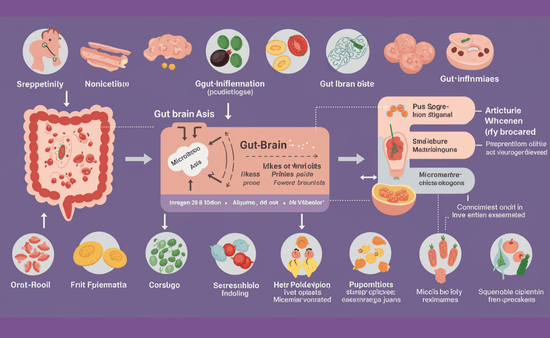
The relationship between gut health and neurological function has emerged as one of the most significant and rapidly evolving areas of neuroscience research. The gut and brain communicate bidirectionally through the vagus nerve, the immune system, and a rich network of neurotransmitters and signaling molecules produced by the gut microbiome — creating a dynamic relationship in which gut dysfunction can directly drive neurological symptoms and vice versa.
Addressing gut health is therefore a meaningful component of integrated neurological treatment for many patients. Interventions may include targeted probiotic and prebiotic supplementation to restore healthy microbiome composition, dietary modifications to reduce gut inflammation and support mucosal integrity, and treatment of specific gut infections or dysbiosis that may be contributing to systemic inflammation affecting the nervous system.
Mind-Body and Lifestyle Therapies

The influence of lifestyle factors on neurological health is well established — and integrated neurological treatment incorporates evidence-based lifestyle interventions as a core component of the treatment plan rather than an afterthought.
Regular physical exercise is one of the most potent neurological interventions available — stimulating the production of brain-derived neurotrophic factor, supporting neuroplasticity, reducing neuroinflammation, and improving cerebrovascular health. Exercise prescriptions are tailored to the individual’s current capacity and neurological condition, with specific modalities chosen for their particular benefits in the context of the conditions being treated.
Sleep optimization is equally central. The brain’s glymphatic system — responsible for clearing metabolic waste products including those implicated in neurodegenerative disease — operates primarily during deep sleep. Chronic sleep disruption impairs this clearance process and accelerates neurological decline. Identifying and addressing the specific factors disrupting sleep — whether pain, anxiety, sleep apnea, or poor sleep hygiene — is a priority in integrated neurological care.
Stress management interventions — including mindfulness-based practices, breathing techniques, and therapeutic support — address the chronic activation of the stress response that drives neuroinflammation and impairs neurological function over time.
Conventional Neurology and Integrative Care Working Together
It is important to emphasize that integrated neurological treatment does not replace conventional neurological care — it complements and extends it. Medications, procedures, and conventional diagnostic tools remain essential components of neurological management for many conditions. The integrated approach adds a layer of personalized, systems-level care that addresses the factors conventional treatment alone may not fully capture.
Patients seeking integrative neurology care in Minnesota will find that the most effective providers work collaboratively with conventional neurologists and primary care physicians — ensuring that the full spectrum of each patient’s neurological needs is addressed through a coordinated, communicative care team rather than fragmented or competing treatment approaches.
Conclusion
Neurological health is the product of an extraordinarily complex interplay of factors — and treating it effectively requires an approach that is equally comprehensive. With the right combination of conventional expertise and integrated care, patients living with neurological conditions have access to a fuller, more personalized path toward improved function and quality of life.